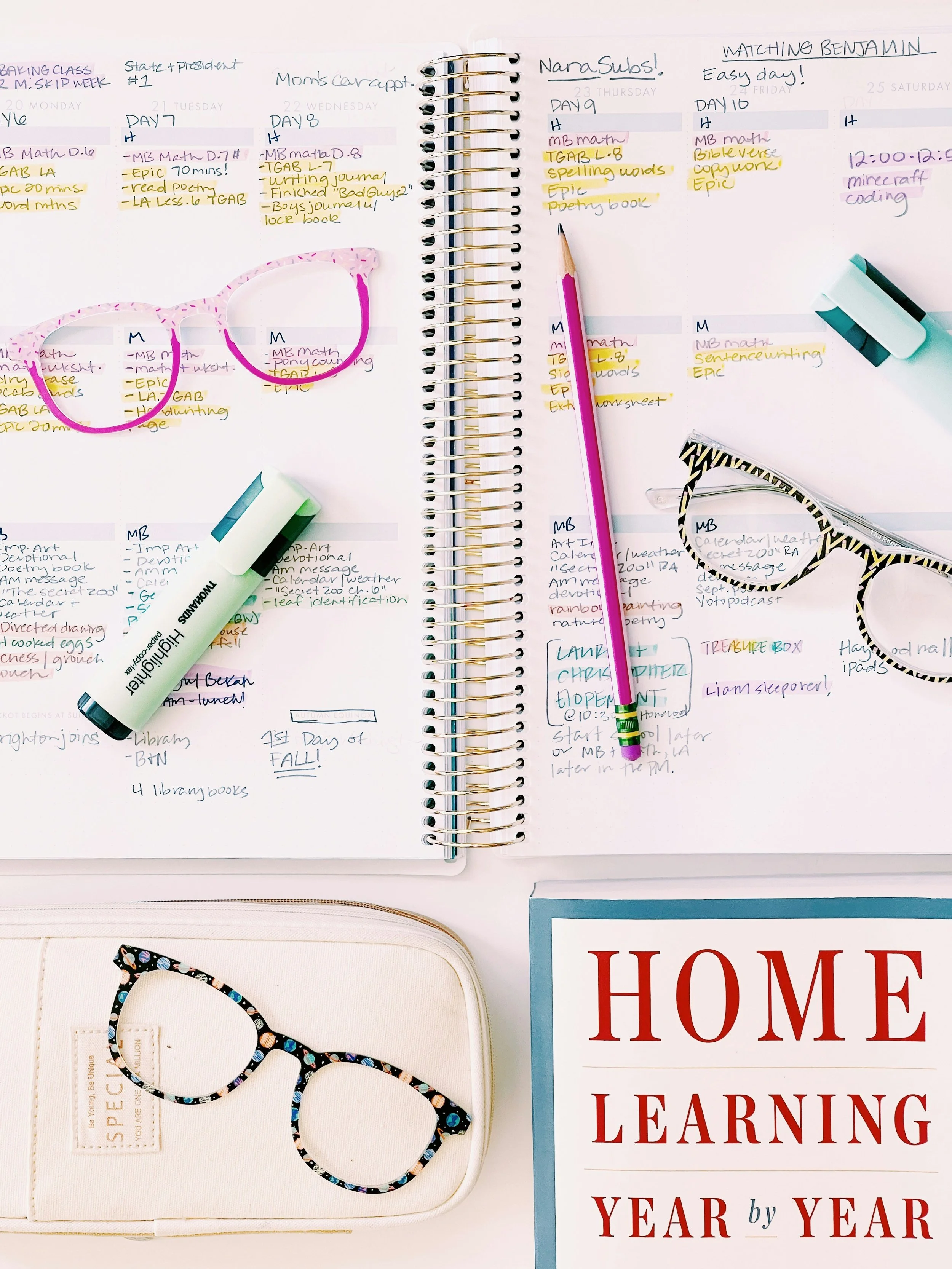
Photo by Taylor Heery on Unsplash
Every year, back-to-school season arrives with a familiar wave of excitement—and pressure.
You start seeing posts about new curriculum, perfectly organized homeschool rooms, color-coded planners, and families who seem to have their entire year planned before the first day begins.
And suddenly you wonder:
“Do I have everything I need?”
“Did I choose the right curriculum?”
“Should my homeschool look more organized?”
For many families, homeschool back-to-school planning can become overwhelming because it starts to feel like preparing for a traditional classroom at home.
But homeschooling gives you something traditional school often cannot: the ability to create a learning experience around your actual child and your family's unique rhythm.
The goal is not to create a perfect school year.
The goal is to create a meaningful one.
Back-to-Homeschool Doesn't Have to Look Like Traditional School
One of the biggest mindset shifts for homeschool families is understanding that a new school year does not have to begin with recreating a classroom.
Your homeschool does not need:
A strict daily schedule from the first day.
Every possible resource available.
A separate lesson plan for every minute.
A picture-perfect learning space.
What it does need is clarity.
Ask yourself:
What are our goals for this year?
What does my child need most right now?
What interests do we want to explore?
What kind of routine supports our family?
These questions create a stronger foundation than simply copying what other families are doing.
Start With Your Child, Not Your Curriculum
One of the most common sources of homeschool parent overwhelm is choosing materials before understanding what your child actually needs.
It is easy to get caught up searching for the “perfect” curriculum.
But before purchasing resources, consider your child's:
Strengths
Interests
Learning pace
Current abilities
Areas where they need support
Preferred ways of learning
A child who loves creating may benefit from hands-on projects.
A child who enjoys reading may explore topics through books and research.
A child who needs more movement may learn better through interactive activities.
Personalized homeschool planning begins with knowing the learner.
The resources should support your child—not the other way around.

Photo by Markus Winkler on Unsplash
Create a Flexible Homeschool Schedule
Many families begin the year with a detailed homeschool schedule and quickly discover that real life does not always follow the plan.
Someone gets sick.
A child becomes deeply interested in a topic.
A project takes longer than expected.
A family responsibility changes the day.
Flexibility is not a sign that your homeschool is unorganized.
It is often what allows learning to happen naturally.
Instead of planning every minute, consider creating a simple rhythm:
Morning: Core learning activities, reading, or family discussions.
Midday: Independent work, projects, or focused practice.
Afternoon: Outdoor learning, creative activities, or exploration.
Your schedule should support your family—not create constant pressure.
Organize Your Homeschool Around Priorities
Homeschool organization does not have to mean having hundreds of supplies or a complicated system.
Sometimes the most effective organization begins with knowing what matters most.
Choose a few priorities for the year:
Academic goals.
Personal growth goals.
Family goals.
Skills your child wants to develop.
Interests they want to explore.
Then build your resources around those priorities.
You may discover that you need fewer materials than you thought.
A simple system that your family actually uses is often better than an elaborate system that creates more stress.
Plan Learning Experiences, Not Just Lessons
A powerful way to make homeschool planning more meaningful is to think beyond individual assignments.
Instead of only asking:
“What lessons will we complete?”
Try asking:
“What experiences will help my child understand and apply what they learn?”
A family project can combine multiple subjects naturally.
For example:
Planning a garden can include science, math, writing, research, and responsibility.
Creating a family budget can include mathematics, decision-making, communication, and practical skills.
Exploring a personal interest can become a research project, presentation, or creative challenge.
Learning becomes more connected when children can see why knowledge matters.

Photo by Nathan Dumlao on Unsplash
Give Yourself Permission to Adjust
Many homeschool parents feel pressure to have the entire year planned before they begin.
But your child will change.
Your family's needs will change.
Your understanding of what works will change.
A good homeschool plan is not one that never changes.
It is one that allows you to adjust.
You may discover that a curriculum is not the right fit.
You may change your schedule.
You may find a better way to approach a subject.
That is not failure.
That is part of creating a personalized education.
How Homeschool Genius Lab Helps Simplify Planning
At Homeschool Genius Lab, we believe homeschool planning should begin with understanding the child.
Instead of starting with a rigid academic path, families can create personalized learning experiences based on their child's strengths, interests, temperament, abilities, pace, and learning needs.
Through flexible learning experiences and meaningful projects, families can build a homeschool approach that feels more intentional and connected.
This helps parents move away from the pressure of creating a homeschool that looks like everyone else's and toward creating one that truly fits their family.
Homeschooling does not have to mean doing more.
Sometimes it means choosing what matters most.
A New School Year Can Begin With Connection
Back-to-school season can be a wonderful opportunity to pause and reflect.
Before buying more materials or creating a complicated schedule, take time to think about the child in front of you.
What makes them curious?
What helps them learn?
What strengths can you build on?
What kind of year would support your whole family?
The best homeschool plan is not the one that looks the most impressive.
It is the one that helps your child continue growing while allowing your family to enjoy the learning journey.
Before planning your new homeschool year, explore Homeschool Genius Lab and discover how personalized learning can help you create a flexible, meaningful experience built around your child's unique needs.
Create a homeschool plan built around your child's strengths, interests, and goals. Discover Homeschool Genius Lab today.