What Your Child's Temperament Reveals About Learning

Photo by Jeton Bajrami on Unsplash
By HomeschoolToGo Genius Lab (formerly HomeschoolToGo)
Child temperament and learning are deeply connected. Discover what your child's behavior really reveals—and how to support them better.
When Behavior Isn't What It Seems
Your child hesitates before answering a question, even when you know they understand the material. Or maybe they need to move around the room while thinking, get upset over small changes in routine, or take longer than expected to respond to something simple.
It's easy to read these moments as disinterest, defiance, or a struggle with the material itself.
But often, something else is happening entirely.
Child temperament and learning are closely connected, and much of what looks like an academic or behavioral issue is actually a child's natural temperament showing up in how they engage with the world. Understanding this difference can change not only how you teach, but how your child experiences learning altogether.
What Temperament Really Means
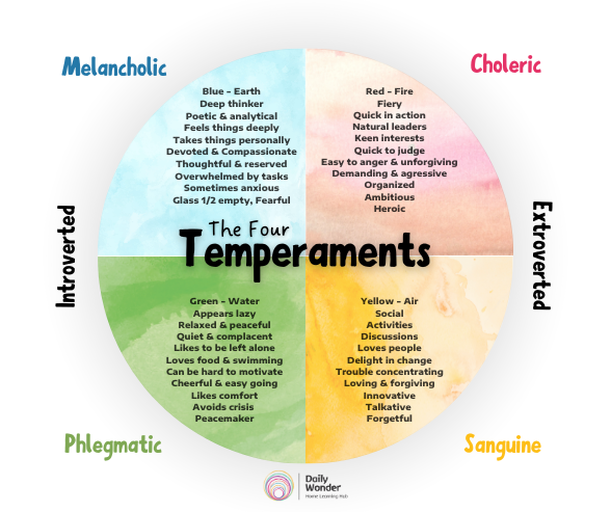
Temperament refers to a child's natural, built-in way of responding to the world—their energy level, emotional intensity, adaptability to change, and general approach to new situations.
It's not something a child chooses, and it's not something that needs to be corrected. It's simply part of who they are.
A child with a cautious temperament may need more time to feel comfortable before participating. A child with high emotional intensity may react strongly to frustration, not because the task is too hard, but because that's how they experience emotion in general. A highly active child may genuinely think better while moving.
None of these traits indicate a lack of ability. They reflect a learning personality that deserves to be understood, not managed away.
Common Behaviors Parents Misread
Many parents come to understand their child's temperament only after misinterpreting it for a while—which is completely normal, especially without a clear framework for what to look for.
Here are a few common examples:
Shyness or hesitation
A child who is slow to answer or reluctant to speak up isn't necessarily unsure of the material. They may simply need more internal processing time before responding aloud.
Emotional intensity
A child who reacts strongly to a difficult problem isn't necessarily overreacting. Strong emotional responses are often just part of how that child experiences challenge in general.
Constant movement
A child who can't sit still isn't necessarily unfocused. Movement may actually help that child concentrate, rather than distract from it.
Resistance to change
A child who struggles when a routine shifts unexpectedly isn't being difficult. Some children simply need more predictability to feel secure enough to engage.
Recognizing these patterns is the foundation of understanding your child's temperament—and it often brings immediate relief to parents who've been searching for what they were "doing wrong."
Why This Understanding Changes the Way You Teach
Once you start to see temperament as information rather than a problem, your response to your child can shift in helpful ways.
For example:
A child who needs processing time might benefit from being asked a question and then given a quiet moment before responding, rather than being expected to answer instantly.
A child with high emotional intensity might do better with shorter learning sessions and built-in breaks, so frustration has less chance to build up.
A child who needs movement might learn a spelling list while walking, or explain a math concept while building something with their hands.
A child who needs predictability might benefit from a visual schedule or a heads-up before transitions happen.
None of these adjustments lower expectations. They simply create conditions where a child's real abilities have room to show up—an approach closely connected to strengths-based education.
Temperament and Emotional Development Go Hand in Hand
It's worth noting that temperament isn't only about academics. It's deeply tied to emotional development and learning overall.
A child who feels understood—rather than constantly corrected for how they naturally respond to the world—tends to approach challenges with more confidence. A child who feels misread, on the other hand, may begin to associate learning with frustration, even when the material itself isn't the real issue.
This is why understanding your child's temperament isn't just a teaching strategy. It's a way of helping them build a healthier relationship with learning in general.
How Homeschool Genius Lab Approaches This Differently
If you've been trying to make sense of your child's reactions, pace, or need for movement or predictability, know that these patterns are valid and worth honoring—not obstacles to push past.
Homeschool Genius Lab (formerly known as HomeschoolToGo, www.homeschooltogo.org) was built on the belief that effective education starts with understanding the whole child, including their temperament.
Here's how that shows up in practice:
Personalized education based on how your child actually processes the world. Rather than expecting every child to respond the same way to the same approach, we help build learning experiences around each child's natural pace, energy, and emotional style.
Respect for individual response styles. Whether your child needs more time to answer, more movement to focus, or more predictability to feel secure, these needs are treated as useful information, not inconvenience.
Support for emotional development alongside academics. We consider a child's confidence and emotional comfort as part of the learning process, not separate from it.
A strengths-based approach to learning personality. Instead of trying to change a child's natural temperament, we look for ways to work with it—so children can engage with learning as themselves, not as a different version expected to fit the material.
Flexibility to adjust pacing, structure, and environment. Because there's no rigid one-size-fits-all format, sessions and activities can be shaped around what actually helps your child feel ready to learn.
Ongoing support for parents. Understanding temperament takes observation and time. We work alongside families throughout that process, offering guidance as you get to know your child as a learner.
The goal isn't to smooth over a child's natural temperament. It's to build an educational experience that makes room for it.

Photo by Ladislav Stercell on Unsplash
A Gentler Way to See Your Child
If you've been quietly worried about behaviors you didn't quite understand, take heart: much of what looks like resistance, disinterest, or difficulty is simply your child's temperament asking to be understood.
Child temperament and learning are more connected than most traditional approaches acknowledge—and once that connection is recognized, learning often becomes calmer, both for your child and for you.
If you'd like guidance on understanding your child's unique temperament and building an educational experience around it, you can enroll in the program to begin creating a more respectful, motivating learning environment for your child.
HomeschoolToGo Genius Lab (formerly HomeschoolToGo) — The world's only personalized and bilingual homeschooling program, empowering families from PreK through Grade 8 to educate in two languages with confidence, joy, and intention.