Why Personalized Education Is the Future of Learning
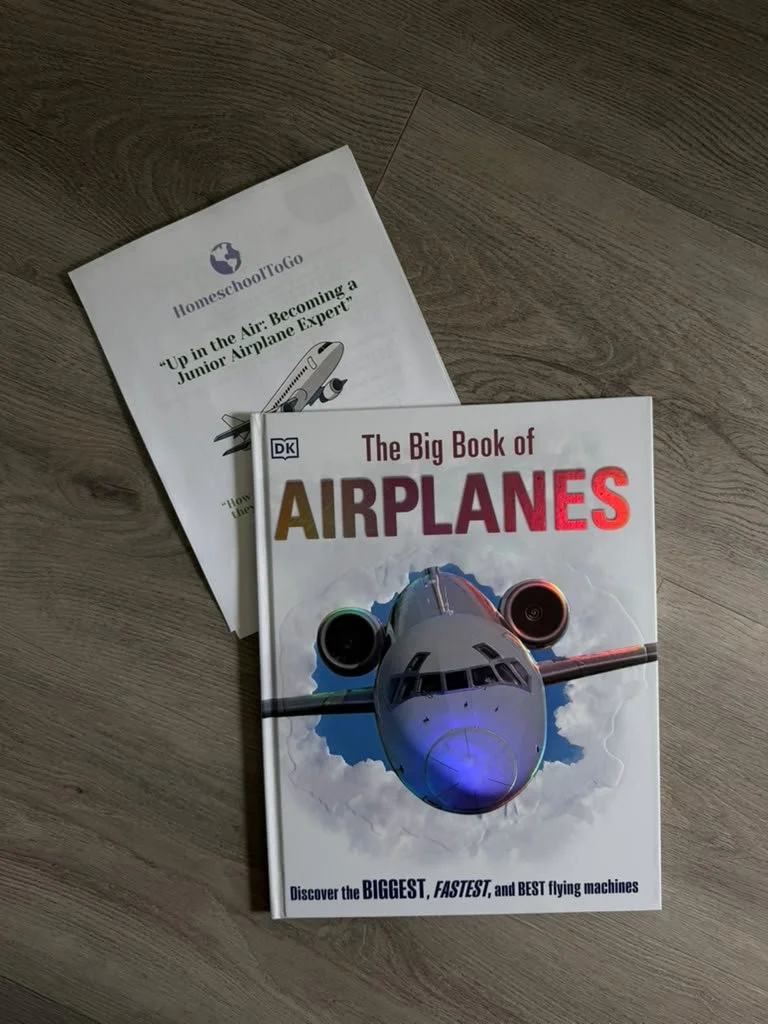
HomeschoolToGo Genius Lab Student - Personalized Project Based Learning - “Up in the Air: Becoming a Junior Airplane Expert”
By HomeschoolToGo Genius Lab(formerly HomeschoolToGo.org)
Imagine a hospital where every patient receives the exact same treatment, regardless of their symptoms, their history, or their body. No one would accept that as good medicine. We would call it negligent.
And yet, for over a century, that is precisely the model we've used in education. Same lesson. Same pace. Same test. Same day, every day, for thirty children who have almost nothing in common except their birth year.
We have never questioned this model — not because it works, but because it's the only one most of us have ever known.
That era is ending. And it isn't ending because of a trend. It's ending because we finally understand enough about how children actually learn to know that the old model was never built for them in the first place.
Personalized education isn't the future because it's innovative. It's the future because it's accurate.
The System We Inherited Was Never Designed for Children
To understand why personalized education matters, it helps to understand where the traditional model actually came from.
The modern classroom — rows of desks, fixed schedules, age-based grouping, standardized testing — wasn't designed around how children learn. It was designed during the industrial revolution to efficiently process large numbers of students with limited resources, producing a uniform, predictable outcome. It borrowed its structure from the factory floor, not from developmental psychology.
That system did something remarkable for its time: it scaled basic literacy to millions of people who previously had none. That achievement should never be dismissed.
But it also built in a fundamental flaw — one we've spent the last hundred years trying to patch around the edges instead of solving directly. The factory model assumes children are interchangeable units that should be processed at the same speed, in the same way, toward the same outcome.
Children have never been interchangeable. We simply didn't have the tools, the research, or the flexibility to do anything differently — until now.
What We Now Know About How Children Actually Learn
Over the last several decades, the science of learning has advanced dramatically — and almost none of it supports the one-size-fits-all model.
Howard Gardner's theory of Multiple Intelligences, introduced in 1983, demonstrated that human intelligence isn't a single measurable trait but at least eight distinct capacities — linguistic, logical-mathematical, spatial, musical, bodily-kinesthetic, interpersonal, intrapersonal, and naturalist. A standardized test measures perhaps two of these. The other six remain invisible to a system that was never built to see them.
Cognitive science on learning styles has shown that children absorb and retain information differently depending on whether they engage visually, auditorily, kinesthetically, or through reading and writing. A lesson delivered in only one format will always underserve a portion of any classroom — not because those children are less capable, but because the format doesn't match how their brains build understanding.
Neuroscience on mastery-based learning has demonstrated that forcing children to move forward before they've mastered a concept doesn't just slow their progress — it actively damages their confidence and their relationship with learning itself. Meanwhile, children who race ahead of a fixed pace become bored, disengaged, and eventually convinced that school has nothing left to offer them.
Research on emotional and social development has shown that academic outcomes are deeply intertwined with emotional regulation, a sense of belonging, and intrinsic motivation — none of which a rigid, one-size curriculum is designed to nurture.
Put simply: we now have decades of evidence telling us that children learn in wildly different ways, at wildly different paces, through wildly different channels — and we have continued, largely out of institutional inertia, to teach as if none of that were true.
Personalized education is what happens when we finally let the evidence lead.
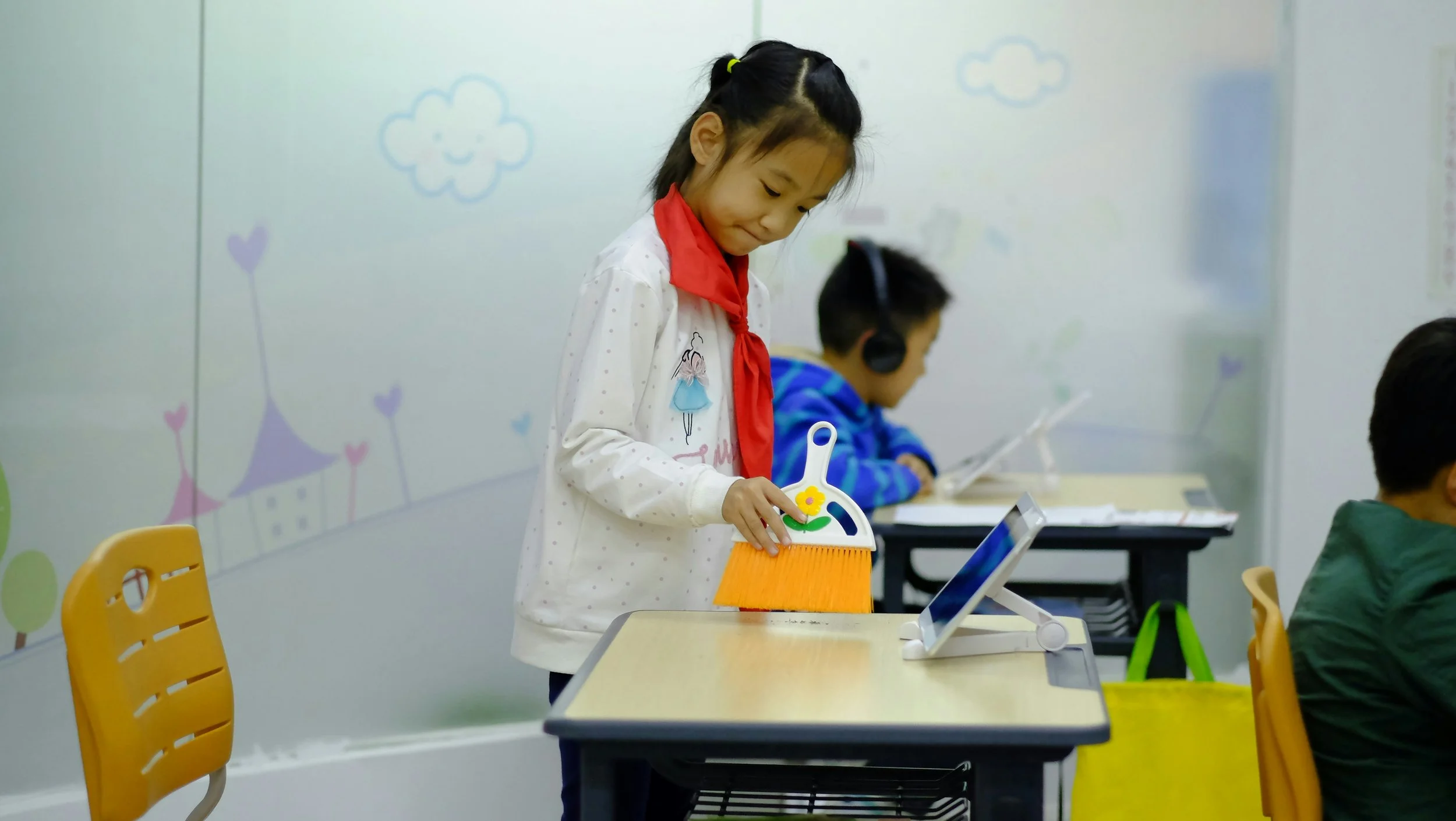
Photo by Jerry Wang on Unsplash
Why "Personalized" Doesn't Mean "Easier"
There's a common misconception worth addressing directly: personalized education is sometimes assumed to mean lower standards, less rigor, or a softer path through childhood.
The opposite is true.
A personalized curriculum doesn't lower the bar — it removes the obstacles that were never academic to begin with. When a kinesthetic learner is finally taught through hands-on projects instead of static worksheets, they aren't getting an easier education. They're finally getting access to the same rigorous content through a pathway their brain can actually use.
When a child who masters fractions in two days instead of two weeks is allowed to move forward immediately, that isn't a shortcut. It's an acceleration that the old system actively prevented through arbitrary pacing.
When a child is gifted with visual-spatial intelligence designs, builds and presents their creations, measuring, scaling, and building over a period of a month or more, they are doing something far more rigorous than memorizing a textbook chapter — engineering.
Personalization raises the ceiling for every child by removing a system that, for over a century, quietly imposed an artificial one.
The World Children Are Entering No Longer Rewards Standardization
There's a second, equally important reason personalized education represents the future: the world our children will work and live in has fundamentally changed, and the skills it demands have changed along with it.
The industrial economy that built the traditional classroom rewarded compliance, repetition, and standardized output — because that's exactly what factories needed from their workers. Today's economy rewards something almost opposite: creative problem-solving, adaptability, self-direction, collaboration across differences, and the ability to learn new skills continuously throughout a lifetime.
Artificial intelligence and automation are rapidly absorbing the repetitive, standardized tasks that once defined entry-level work. The capabilities that remain uniquely human — creativity, emotional intelligence, ethical judgment, complex communication, entrepreneurial thinking — are precisely the capabilities a standardized curriculum was never designed to develop, and precisely the ones personalized and holistic education cultivates by design.
Global interconnection means that cultural fluency, language ability, and the capacity to understand perspectives beyond one's own are no longer optional advantages — they are foundational skills. This is exactly why bilingual education has moved from a nice-to-have to a genuine necessity for the world your child will inherit.
The pace of change itself means that the specific facts a child memorizes today will likely be outdated or instantly searchable within their lifetime. What matters far more is whether they've developed into a confident, self-directed learner who knows how to ask good questions, find reliable answers, and apply what they discover to real problems.
A system built to produce uniform output is structurally incapable of developing these capacities. A system built around the individual learner is built for exactly this future — because it has been training the underlying skill all along: knowing yourself, your strengths, and how to keep growing.
Personalized Doesn't Mean Isolated
One objection we hear often: doesn't personalized education — especially through homeschooling — risk isolating children from the social development that traditional schools provide?
The research tells a different story.
Children develop healthy social skills through meaningful relationships with family, community, and peers across a range of ages and contexts — not specifically through being grouped with twenty-five same-age strangers for seven hours a day. Developmental researchers including Dr. Gordon Neufeld and Dr. Gabor Maté have noted that early, prolonged peer-orientation can actually increase a child's stress levels and dependence on peer approval, often at the expense of their relationship with their own values and their family.
Personalized education — particularly the holistic model practiced at HomeschoolToGo Genius Lab — deliberately builds in conflict resolution, leadership, interpersonal intelligence, and real community: through family life, structured group sessions, co-ops, travel camps, and intentional peer connection. The goal isn't isolation. It's social development that happens through genuine relationship rather than forced proximity.
Numerous studies, including research compiled by the National Home Education Research Institute (NHERI), show homeschooled children scoring above average across psychological, academic, emotional, and social measures — a strong signal that personalization and healthy development are not in tension. They reinforce each other.
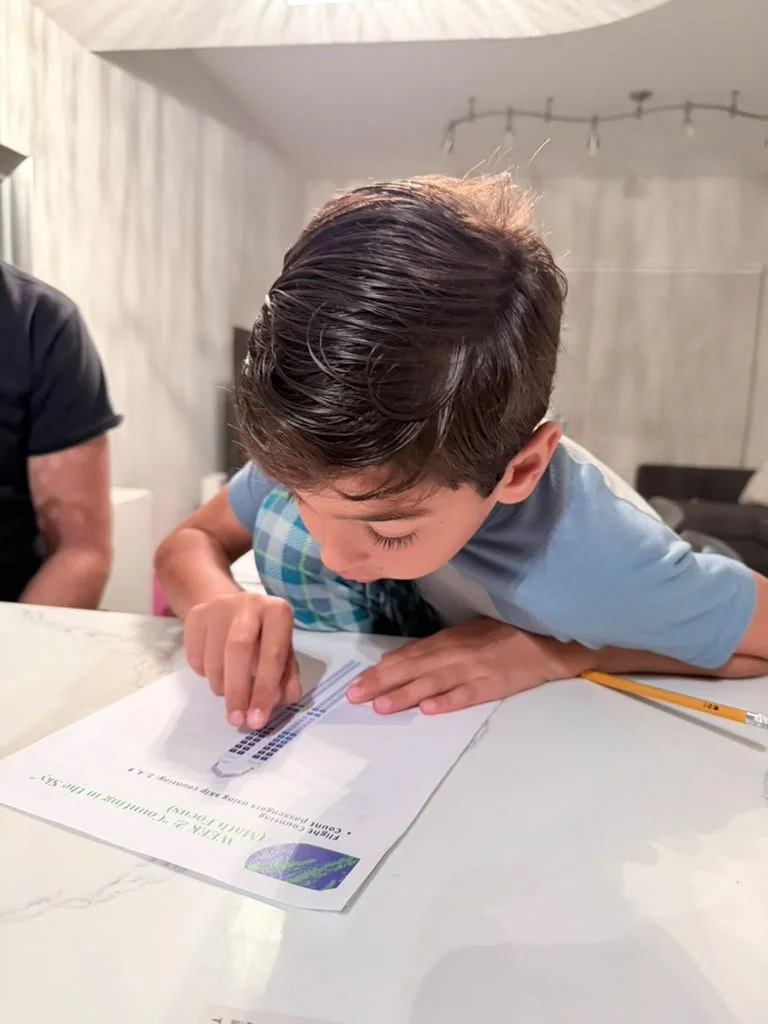
Personalized Project for a 3rd Grader HomeschoolToGo Genius Lab Student
What Personalized Education Actually Looks Like
It's worth grounding all of this in what personalization actually means in daily practice, because the term can sound abstract until you see it applied.
It starts with genuinely knowing the learner — their predominant intelligences, their dominant learning style, their temperament, their pace — before building a single lesson. At HomeschoolToGo Genius Lab, this begins with a Psychological Assessment, not a guess.
It means Project-Based Learning that connects academic content to real challenges a child actually cares about, rather than abstract exercises disconnected from any visible purpose.
It means holistic education that develops emotional intelligence, character, financial literacy, and connection to nature alongside — not instead of — academic rigor.
It means a curriculum that can flex toward bilingual education when a family's values and environment call for it, rather than treating language learning as a separate, optional add-on.
It means pacing that bends to mastery, not to a calendar — moving forward the moment a child is ready, and staying exactly as long as they need to, without guilt or comparison.
And it means doing all of this without requiring twelve hours a day or a household income most families don't have. At HomeschoolToGo Genius Lab, our programs are built to deliver all of this in less than 7 hours per week — because personalization should be a structural advantage, not an added burden.
The Future Belongs to the Individual Learner
Every major shift in education has been resisted at first, then eventually recognized as obvious in hindsight. Universal literacy. Compulsory education. The inclusion of children with learning differences. Each one faced skepticism before it became simply how things are done.
Personalized education is the next chapter in that same story — not a passing trend, but a long-overdue correction. We now understand how children actually learn. We now understand what the world will actually require of them. The only question left is whether we continue clinging to a system built for factories, or finally build one around the children themselves.
At HomeschoolToGo Genius Lab, we've already made that choice. We are the world's only personalized and bilingual homeschooling program, built on the conviction that every child carries a genius worth discovering — and that the right curriculum doesn't ask a child to fit into it. It fits itself around them.
The future of learning isn't a new app, a new device, or a new buzzword. It's a return to something simple and overdue: an education that finally sees the child in front of it.
👉Apply to HomeschoolToGo Genius Lab
HomeschoolToGo Genius Lab (formerly HomeschoolToGo.org) — The world's only personalized and bilingual homeschooling program, empowering families from PreK through Grade 12 to educate with purpose, joy, and intention.